

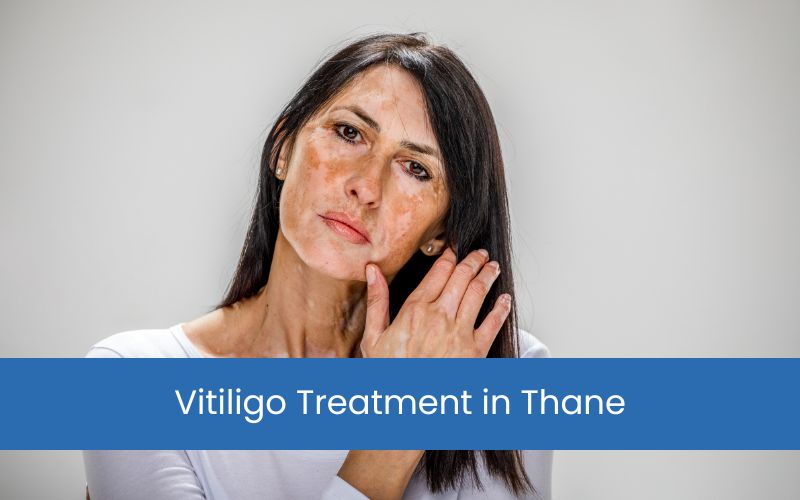
Vitiligo Treatment in Thane – Restoring Confidence with Expert Care
Vitiligo is more than a cosmetic concern—it can deeply impact a person’s self-esteem and emotional well-being. As a visible skin condition, it often draws unnecessary attention and misunderstanding from society. At our advanced dermatology clinic in Thane, led by Dr. Mithali Jage, we specialize in diagnosing, managing, and treating vitiligo with evidence-based dermatological practices and personalized care.
What is Vitiligo?
Vitiligo is a chronic skin disorder characterized by the loss of skin pigment (melanin), resulting in white patches or depigmented areas on the skin. It occurs when melanocytes, the cells responsible for producing pigment, are destroyed or stop functioning.
Vitiligo is not contagious or life-threatening, but it can lead to emotional distress, especially when it affects visible areas like the face, hands, or scalp.
Types of Vitiligo
Understanding the type of vitiligo is key to determining the right treatment plan:
- Segmental Vitiligo: Limited to one side or part of the body, often starts early in life.
- Non-Segmental (Generalized) Vitiligo: The most common type, affecting both sides symmetrically.
- Focal Vitiligo: A few isolated spots without a clear pattern.
- Mucosal Vitiligo: Affects mucous membranes (like lips or genitals).
- Trichrome Vitiligo: Shows varying degrees of pigmentation in the same area.
Causes and Triggers of Vitiligo
The exact cause of vitiligo isn’t fully understood, but it is often linked to:
- Autoimmune factors (immune system attacking melanocytes)
- Genetic predisposition
- Sunburn or skin trauma (Koebner phenomenon)
- Stress or emotional shock
- Thyroid disorders or other autoimmune conditions
Symptoms of Vitiligo
- Painless white or light patches on the skin
- Symmetrical or asymmetrical distribution
- Early graying of scalp or facial hair
- Changes in retina or mucosal pigment
Vitiligo Treatment Options in Thane
At our Thane clinic, we offer customized vitiligo treatment plans based on the patient’s skin type, the extent of depigmentation, and the location of patches. Our aim is to stop progression, promote repigmentation, and improve quality of life.
1. Topical Treatments
- Steroids and calcineurin inhibitors to reduce inflammation and stimulate pigment production.
2. Phototherapy (Narrowband UVB)
- Considered one of the most effective treatments for vitiligo.
- Exposes skin to controlled UVB light to stimulate melanocyte activity.
3. Excimer Laser Therapy
- Targets small, localized patches.
- Quick and precise with minimal damage to surrounding skin.
4. Micropigmentation / Skin Camouflage
- Used to conceal stubborn white patches on visible areas like lips and hands.
5. Surgical Options (in stable cases)
- Punch grafting
- Suction blister grafting
- Melanocyte transfer
These are reserved for patients with stable, non-spreading vitiligo.
6. Oral Medications & Supplements
- Used in cases with autoimmune links or to enhance therapy results.
Why Choose Dr. Mithali Jage for Vitiligo Treatment in Thane?
- Specialized training in autoimmune and pigmentary skin disorders
- Experience with diverse skin tones, ensuring culturally sensitive care
- Access to latest technologies in dermatology, including narrowband UVB
- Supportive, long-term care plans with realistic outcome expectations
- Focus on emotional well-being along with medical management
Address & Clinic Information
Skintellence – Skin & Hair Clinic
Office No. 4, 1st Floor, Asher Tiara Commercial Complex,
Pokharan Road No. 2, above Huny Huny Shop,
Gandhi Nagar, Thane West, Maharashtra 400610
Frequently Asked Questions (FAQs)
Q. Can vitiligo be cured completely?
There is no permanent cure, but long-term management and significant repigmentation are possible with proper treatment.
Q. Is vitiligo hereditary?
It can run in families, but not all individuals with a family history will develop it.
Q. Is vitiligo dangerous to health?
No, vitiligo is a non-life-threatening and non-contagious skin condition.
Q. Can diet help in vitiligo?
While diet alone can’t cure it, a balanced, antioxidant-rich diet supports overall skin health.
Q. Is treatment safe for children?
Yes, many treatments, including topical creams and phototherapy, are safe and effective for children with vitiligo.